28 Şubat 2014 Cuma

The Begrudging Visitor

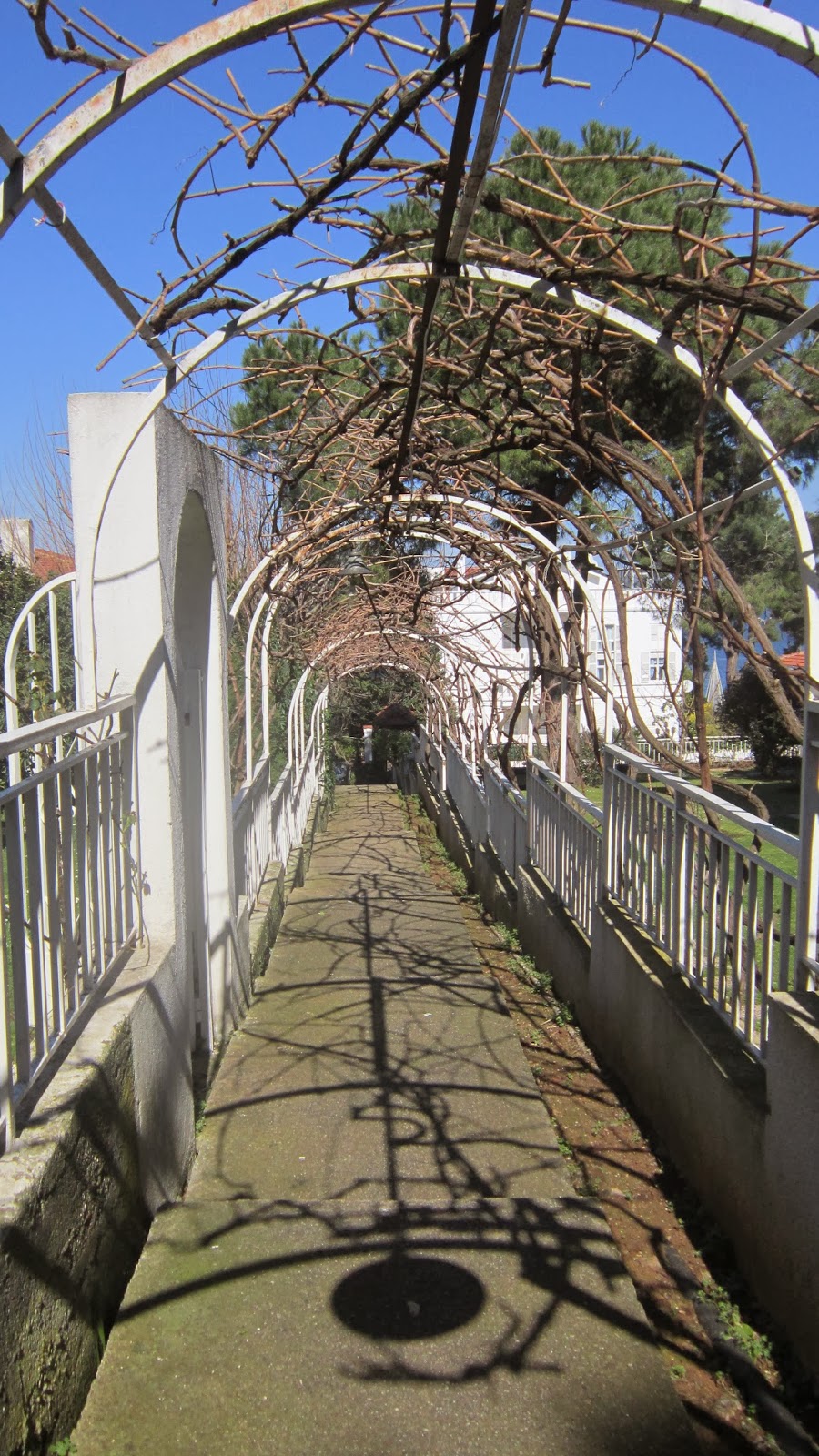
Arap Izzet Pasha (Iliasko) Manor
  

Iliasko Manor in Buyukada (Prinkipo) was commissioned to be built by Konstantinos Iliasko, who at the time was the head manager of Athens Bank in Galata region. At the start of the 20th century, Iliasko Manor alongside its neighbouring manor came under Arap Izzet (Holo) Pasha’s ownership. Arap Izzet Pasha was known for his close relationship with Sultan Abdulhamit II, and both of these manors from this time started to be called after his name.


Perhaps the most interesting fact about the manor is that between the years 1929 and 1931, famous Soviet Revolutionist Lev Trotsky lived here in exile. You can get more information on Trotsky here. You can also watch a six-episode documentary on Trotsky’s life on the island from this link.


The original Iliasko Manor was demolished in 1980s and was reconstructed by Architect Erdem Hamami. 


After the manor was damaged from a fire in 1931, Trotsky respectively stayed at the Savoy Hotel, a manor in Kadıkoy and the Yanaros Manor on Buyukada until he left Turkey in 1939. You can find pictures of the Yanaros Manor form a former exhibition about it through this link.


While it is impossible to visit these historical landmarks since they are privately owned, we recommend you take a little break and visit either Buyukada or one of the other islands before it starts to get overcrowded with tourists in the summer.


Take care of yourselves,
Tracer of Istanbul

22 Şubat 2014 Cumartesi

This is Just the Beginning

Hagia Sophia 


Considered to be the most significant example of Byzantine architecture, Hagia Sophia was built on the grounds of two former churches. The remains of these older churches were extracted during an archeological excavation in 1935 and the findings are currently exhibited in the museum’s garden. While it is presumed that there are more artifacts from this time under the church, these excavations were cancelled in fear of damaging the church’s foundation.


After being used as a church for 916 years, the church was converted into a mosque after Constantinople was conquered in 1453. Perhaps it was tolerance, an interest in cultural heritage, or respect for other beliefs, but the church’s conversion into a mosque shied away from destroying Christian artifacts.  Instead, the Christian mosaics, drawings and icons were preserved through either removing them into storage or covering them up. Used as a mosque until 1935, Hagia Sophia now stands as a museum and an evidence of two religions coexisting in one space.  


As the museum is one of the most popular tourist attractions in town, we recommend you visit Hagia Sophia early in the morning. Covered in interesting details (even within stone walls), the museum also has its own celebrity living on the grounds: The Hagia Sophia cat! You can check out the famous cat’s blog here, and also take a look at the beautiful pictures of the museum. One other famous spot in the museum is the “wishing stone”, in which you can insert your thumb and rotate it a full round to make a wish.  

There is much to see outside Hagia Sophia too: Sultan mausoleums (Sultan Mustafa Ist’s and Sultan Ibrahim’s were converted from baptisteries), an Ottoman elementary school, fountain and many more, alongside a little café where you can take a little break.

You can learn more about Hagia Sophia from here.

We also recommend Murat Belge’s Istanbul Travel Guide (İstanbul Gezi Rehberi) - if you can manage to find an English copy- to continue learning interesting details about the city.


With the latest excavation findings, and knowing that the ruins of two former churches still lay under it, Hagia Sophia stands as an archeological giving tree, which makes us think that what we have found so far is just the beginning. 

Take care of yourselves,
Tracer of Istanbul

9 Şubat 2014 Pazar

The Light at the End of the Tunnel

Beylerbeyi Palace - Beylerbeyi


When you decide to tour around this magnificent building, you first have to pass through a tunnel that was built in Mahmut II’s reign.  At the end of the tunnel lies the gardens of Beylerbeyi Palace, and the whole walk makes you feel like you have traveled back in time. Make sure you don’t pass by the fountain while in the tunnel, which was also built in the same era.

While this neighborhood’s establishment dates back to Byzantium Empire, the name –according to traveler İnciciyan- comes from Beylerbeyi Mehmet Pasha’s villa that was built in the 16th century. Built where a church used to stand, Abduallah Aga Mosque (formerly known as Cross Mosque) in this neighborhood stands as a remainder of that era.


A popular summer getaway for many Sultans, in 1829 Mahmut II orders for a palace to be built here. After the fire in 1851, Sultan Abdülaziz orders architect Sarkis Balyan to rebuild the palace.

The palace in which many kings and presidents were received, is also where Abdülhamit II lived for six years until his death, after being dethroned in 1909. The palace was restored by architect Vedat Tek in 1909.

After 1923, the palace continued receiving heads of states, and in 1936 it was the home of the Balkan Games Festival. The last guest of the Palace, Mustafa Kemal Atatürk, spent a night in this building during the Festival.


Photography is not allowed inside the palace, but you can find information on it here, alongside 3D view here. If you choose not to go in the building, you can tour around the gardens for a small fee (1 Turkish Lira). There is also a small café here if you wish to stop and rest a little.


The statues in the gardens were made by Pierre Louis Rouillard in 1864 after Sultan Abdülaziz’ order. You can find more information on the sculptor here, and take a look at his work from here.


While most of Rouillard’s pieces are in this garden, you can find more of his work in Topkapı Palace and Dolmabahçe Palace. His famous Ramping Horse statue is in Sabancı Museum and his famous Bull statue is in Kadıköy Square.

Closed on Mondays and Thursdays, the palace is open from 9 am to 5 pm every other day.


 Now, it is your turn to time travel through the tunnel…

Take care of yourselves,
Tracer of Istanbul

4 Şubat 2014 Salı

Folksongs and Chansons

Istanbul Radio House

Initially located in the Grand Post Office building, Istanbul Radio Station started its broadcasting through playing music out to the street by a loud speaker. In 1949 the station moved to this magnificent building. 


Through this link, we learned that the architects of the building were Doğan Erginbaş, Ömer Güney and İsmail Utkular. Their design for the building was selected after they’ve submitted to the competition that the Station started when it was looking for a new home.

While some may think that the location of the building is highly profitable in terms of urban transformation, Istanbul Radio holds a special place in Istanbulites’ hearts.

The station archive that contains thousands of music and broadcast records is unfortunately not open to public. However, we strongly encourage you to stop by at the little store inside the building where you can buy replicas of these records alongside precious souvenirs. 


You can also watch one of the “concert broadcasts” that takes place in the Mes’ud Cemil Studio. You can follow their events through their Facebook page, from here, or simply by calling 0212 232 12 00.


We end this week’s entry with a TRT broadcast (Tanıdınız mı; Did you recognize?) hosted by Tarık Gürcan and music preformed by Şerif İçli. The guest of the broadcast is the winner of Istanbul Radio’s music contest in 1950: Zeki Müren. We reminisce the golden era of the radio…


Take care of yourselves,

Tracer of Isanbul

29 Ocak 2014 Çarşamba

Down By the Station

The architect of Sirkeci Train Station that opened to use in 1890 is none other than August Jachmund that we have previously mentioned in this blog about Deutche Orient Bank. When designing the station, Jachmund portrayed it as a conjecture of East and West.


While the station used to be by the Bosphorus when it was first built, later the building got landlocked with land reclamations. These days you can find truck drivers that have their destinations pinned on their collars waiting for customers by the main door of the station that is no longer being used (above picture).


During the construction of the station, the part that passes through Topkapı Palace’s garden and reaches Sirkeci was ordered to be built by Sultan Abdülaziz.

Sadly the Byzantium and Ottoman villas and palaces that were on the way were destructed at this time.


Once you are inside the station, do stop by at the Railways Museum. Alongside historical documents, railway scale models, photos, and various equipment; you get to explore the locomotive of a train.


Also within the station, Orient Express Restaurant thatwas formerly known as Gar Lokantası used to be a hotspot in the 1950s for household names of İstanbul to meet up. 


Inspired by this train menu photo, we bid you goodbye with famous singer Manço and famous group Kurtalan Ekspres’ famous song: Dönence. http://www.youtube.com/watch?v=ZjdZCInV3r4


Take care of yourselves,
Tracer of Istanbul

19 Ocak 2014 Pazar

From Light Watching Festivities to Fireworks

Çırağan Palace

The Palace was commissioned by Nevşehirli Damat İbrahim Pasha for his wife Fatma Sultan in 17th century on the ground then known as Kazancıoğlu Gardens. During the infamous Tulip Era, the palace gardens hosted light watching festivities where candles would be placed on turtles roaming the gardens, and on clams released on to the shore. As such, the palace earned the nickname çırağan, “light” in Farsi.


In Mahmut II’s reign the palace was destructed and another palace was built. This one as well was destructed as Abdülmecit wanted to replace it with a western style palace; however when he died, Abdülaziz ordered the palace to be finished in eastern style. The architects of the palace were from the famous Balyan family.


Used as the parliament in 1909, the building and many valuable artifacts such as Abdülhamit II’s private collection and Murat V’s library were destroyed in a fire. The only part of the palace that made it to our times is the granite bathhouse (hamam) of the palace.


 During the occupation of Istanbul, The French army occupied the building and it was called the Bizo Barracks. The Islamic monastery graves were destroyed during this occupation since soldiers believed there were gold inside the graves.

Handed over to the municipality in 1947,in 1968, unfortunately the centuries old trees of the garden’s palace were cut down and the Beşiktaş Stadium was built.

Used as a hotel since 1992 and occupies 76360 square meters. There is a bridge to visit the neighboring Yıldız Palace. Us; Istanbul Tracers, we pass under this bridge a lot, we hope that this bridge will stay safe for a long time.


You can click here for more information on the palace. 

Take care of yourselves,
Tracer of Istanbul

18 Ocak 2014 Cumartesi

The First Skyscraper of the City

Deutche Orient Bank

Have you ever paid any attention to this marvelous building also known as Germania Han? 

Designed by architect August Jachmund who also designed Sirkeci Train Station, this building was constructed between the years 1900 and 1910.


Its tower qualifies the building to be considered as one of the first skyscrapers of Istanbul. Facing the square, the tower is the most grandiose part of the triangular structure. While the entrance floor was used as a bank, upper floors were reserved for trade businesses.

Later bought by Yapı Kredi Bank, the building was renovated in 1997. You can check out the restoration details through this (But it's only in Turkish). While we were not allowed to take pictures inside the building, it is rumored that even this historical landmark will be turned into a hotel. Perhaps then we can show you what the inside looks like.


When you are visiting this building make sure you stop by at First Vakıf Han right near Deutche Orient Bank. This building was designed by Mimar Kemalettin, who was a student of August Jachmund and was influenced by him.

Take care of yourselves,
Tracer of Istanbul